The Role of Blockchain in Verifying Sustainable Supply Chains
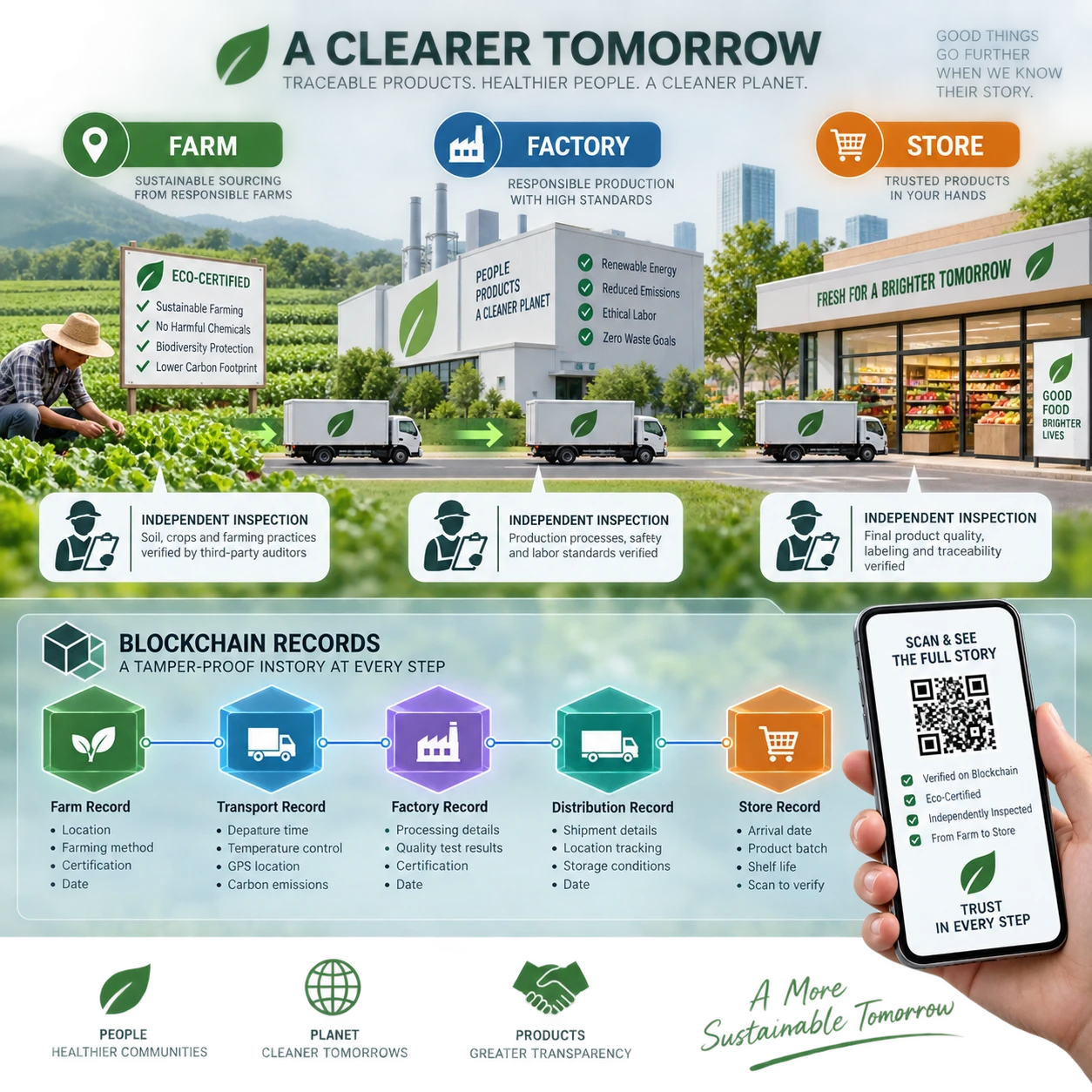
When a product is labelled sustainable, shoppers often have little way to see how its materials were sourced or how it was made. Blockchain can help connect records across a supply chain, making product movements and transactions easier to trace. But a permanent record is not the same as proof that a sustainability claim is true.
For blockchain to support credible claims, its records need reliable data, clear standards, and independent checks. The strongest approach combines traceability with eco-certification and audits, while being candid about what the evidence does and does not show.
Why supply-chain sustainability claims are hard to verify
Sustainability claims are difficult to verify because products often pass through many suppliers, processors, and countries before reaching consumers. Each handoff can create gaps in the evidence about origin, working conditions, or environmental impact.
Consider a garment described as made with responsibly sourced cotton. The cotton may come from several farms, be blended at a ginning facility, spun into yarn, dyed, and sewn by different businesses. A brand may hold invoices and supplier declarations, but those documents do not always show that the cotton in a specific garment came from the stated farms.
The problem is partly one of visibility. A company may know its direct suppliers but have limited information about farms, mines, fisheries, or subcontractors further upstream. Records can also use different formats, refer to different batches, or rely on self-reported data that has not been checked.
Claims such as “low impact,” “responsibly sourced,” or “carbon neutral” add another challenge: they need clear definitions and evidence. A product’s origin may be traceable while its environmental performance remains uncertain. Without a defined scope, measurable criteria, and supporting documentation, even a technically detailed supply-chain story can leave consumers unable to judge what the claim really means.
How blockchain supports traceability
Blockchain supports supply-chain traceability by allowing participating organizations to record transactions and product events in a shared, tamper-resistant ledger. Those entries can help document a product’s chain of custody as it moves between suppliers.
A typical record might identify a batch of cocoa, its harvest location, the cooperative that sold it, a shipment date, and the processor that received it. Later entries could record processing, packaging, and delivery. When each participant logs a transfer, the resulting history can make it easier to spot missing steps or conflicting records.
This shared record can reduce dependence on scattered spreadsheets and email attachments. It may also help businesses investigate a problem, such as a shipment that appears to come from an unapproved source. In some systems, consumers can scan a label to view selected information about a product’s journey.
However, blockchain mainly changes how records are shared and protected from alteration after entry. It does not automatically establish that the original information is correct. A ledger can preserve a false farm location just as effectively as a true one.
Traceability is a record of movement, not a sustainability verdict. Its value depends on what data participants collect, how they link records to physical goods, and whether anyone checks the information. Digital tools such as QR codes, tags, or sensors may help connect a physical batch to its records, but those links also need controls against errors, substitution, or fraud.
What blockchain can—and cannot—prove
Blockchain can show that certain data was recorded and later entries have not been changed without detection; it cannot, by itself, prove that the data is accurate or that a product meets a sustainability standard. That distinction is central to assessing any blockchain-backed claim.
A ledger may provide evidence that a supplier declared a shipment to be organic, that a certificate number was entered, or that a batch moved through named facilities. It cannot independently confirm that a farm followed organic practices, that workers received fair treatment, or that a facility reduced pollution. Those questions require relevant standards, evidence, and verification beyond the ledger.
Data verification can involve checking source documents, inspecting facilities, testing materials, reviewing satellite imagery, or comparing volumes purchased and sold. The appropriate method depends on the claim. For example, confirming a batch’s physical origin may call for chain-of-custody controls, while assessing labor conditions requires a different kind of evidence.
Smart contracts can automate actions when specified conditions are met, such as releasing payment once a document or approved status is recorded. They can improve consistency, but they only act on the rules and data supplied to them. If a condition is poorly designed or an input is false, automation may simply process the mistake faster.
So ask what the blockchain evidence actually establishes. Does it document a transaction, a product’s path, a certificate, or an independently assessed outcome? Those are different levels of assurance, and marketing should not blur them.
Blockchain alongside eco-certification and audits
Blockchain works best alongside eco-certification and independent audits: certification defines the criteria, audits check whether organizations meet them, and blockchain can help preserve and share related records. Each tool addresses a different part of verification.
An eco-certification program may set requirements for a product or production method, specify what evidence is needed, and describe how compliance is assessed. Independent audits can then examine records and practices, including through site visits or sample testing. Blockchain may provide a consistent record of certificate status, batch transfers, or audit-related documentation.
For example, a certified coffee buyer could use a traceability platform to follow a lot from a cooperative to a roaster. Certification and audit evidence would still need to establish whether the farms and processing practices meet the program’s requirements. The ledger may make the documented chain easier to inspect, but it does not replace the audit or the standard.
Combining the approaches can make evidence easier to organize and reduce some recordkeeping gaps. The trade-off is that companies must maintain accurate, compatible data and pay for verification. A blockchain system can add complexity without much value if only a few parties participate, records are incomplete, or no independent party checks them.
Think of the evidence in three layers: the standard says what counts, verification tests whether it happened, and traceability links records to the product. A credible claim should make clear which layers support it and where uncertainty remains.
Greenwashing risks and practical safeguards
Blockchain cannot prevent greenwashing on its own because misleading claims can be built around incomplete, inaccurate, or narrowly selected data. Safeguards must address both the quality of evidence and the way a company describes it.
A brand might trace a raw material to a supplier but omit information about subcontracting, processing impacts, or the share of total production covered. It could also present a recorded certificate as proof that every unit meets a standard when the certification applies only to selected facilities or product lines. These are scope and interpretation problems, not defects that a ledger automatically solves.
More credible systems disclose the claim’s boundaries: which product, batch, sites, time period, and sustainability criteria are covered. They explain who entered the data, who checked it, and how errors or disputes are handled. When a claim relies on a certificate, consumers should be able to identify the scheme and check its scope and status.
- Define the claim precisely. Replace broad language such as “planet friendly” with a specific, measurable statement.
- Check data at the source. Use document reviews, site inspections, testing, or other methods suited to the claim.
- Publish limitations. Disclose missing suppliers, estimated figures, and parts of the chain that have not been verified.
- Keep accountability visible. Identify the responsible business and provide a way to raise questions or report discrepancies.
These steps make greenwashing harder to hide, though no system can eliminate the risk of deception. Independent oversight and meaningful consequences for false claims remain essential.
What to look for in a credible blockchain-backed claim
A credible blockchain-backed claim explains what is tracked, where the data comes from, who verifies it, and what the evidence covers. The presence of blockchain in a label or marketing message is not, on its own, a reason to trust the claim.
Use these questions to assess the evidence:
- What exactly is being claimed? Look for a clear environmental or social outcome, not a vague promise.
- What is the scope? Does the record cover one batch, a product line, selected facilities, or the full supply chain?
- Who supplies the data? Are entries self-reported by suppliers, generated by sensors, supported by documents, or confirmed by another party?
- Who checks it independently? Find out whether an auditor or certification body verifies the relevant practices and how often.
- Can the physical product be linked to the digital record? Ask how the system handles mixing, repackaging, and batch transfers.
- What happens when information is wrong? A trustworthy program should explain how it corrects records, investigates complaints, and updates public claims.
Look for accessible explanations rather than technical language used as a substitute for evidence. A useful disclosure tells you what is known, what has been checked, and what remains uncertain. If the company cannot answer those questions, blockchain may be adding a modern-looking layer to an unverified claim.
Frequently asked questions
Does blockchain prove that a product is sustainable?
No. Blockchain can preserve and share records about a product’s supply chain, but it does not independently confirm that the records are accurate or that the product meets a sustainability standard. Proof requires relevant criteria and credible verification.
Can blockchain prevent greenwashing?
No technology can prevent all greenwashing. Blockchain may make some records easier to trace and discrepancies easier to investigate, but misleading claims can still rely on false inputs, missing data, or unclear wording. Independent checks and transparent disclosures are necessary.
How does blockchain complement eco-certification?
Eco-certification sets criteria and may assess whether a product or operation meets them. Blockchain can help record certificate details and trace product movements through the supply chain. It supports the evidence trail, but it does not replace certification or independent audits.
What happens if incorrect information is entered?
The incorrect entry may remain visible in the ledger, depending on the system’s design, but that does not make it true. A credible program needs procedures to flag errors, add corrected records, retain an audit trail, and amend any public claim that relied on the mistake.